Grease, food and the disposal
Kitchen sink clogs
A kitchen drain rarely blocks all at once. Fat from cooking coats the pipe a little more every week until scraps that used to slide through start to catch. Then one evening the water in the sink just sits there.
What you may be seeing
- Water rising in one bowl when you drain the other one.
- The dishwasher leaving a puddle in its base, or water backing into the sink when it pumps out.
- A sour smell from the drain that lingers after the disposal runs.
- Gurgling from the sink when a nearby bathroom or the washer drains. That one points past the sink, so read the warning signs page too.
If only the kitchen is slow and every bathroom drains normally, the blockage is almost always in the trap under the sink or in the kitchen branch pipe inside the wall.
Before anyone comes
Worth doing
- Stop running water and the dishwasher until the drain is clear.
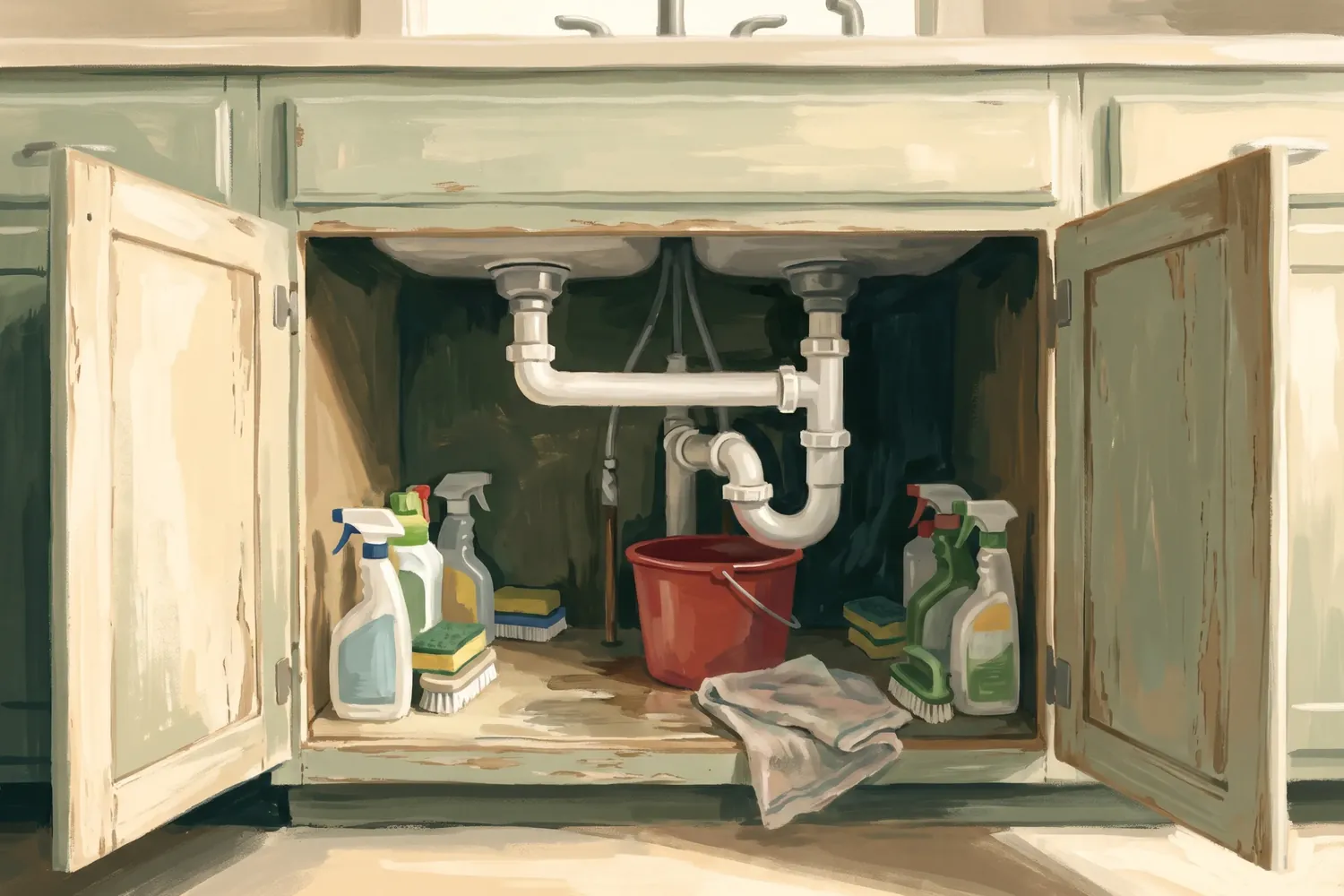
- Clear out the cabinet under the sink so the trap can be reached.
- Set a bucket and towels under the trap. Standing water comes out when it is opened.
- Note whether the disposal hums, runs or does nothing. It tells the plumber where to start.
Better left alone
- Boiling water poured into PVC traps. It can soften joints that are already loose.
- Caustic drain openers in a sink full of standing water. Read why chemical cleaners cause trouble.
- Pushing a plunger hard on a double sink without sealing the other bowl. The force comes straight back up beside you.
How the drain usually gets cleared
The plumber normally starts at the trap: it comes off, gets cleaned, and goes back on with fresh washers if the old ones are flattened. If the trap is clean, the clog sits further down the kitchen branch, and a small cable machine goes in through the trap arm or a cleanout on that line.
A cable punches a hole through grease, but it does not scrape the pipe clean. When the kitchen keeps clogging every few months, ask about jetting the line, which washes the coating off the walls instead of just opening a path through it.
Grease advice from Columbia Water
Columbia Water asks its customers to pour leftover grease into a jar or can, let it cool and put it in the trash, and to scrape plates into the trash before rinsing. Hot water and dish soap only move grease further down the pipe, where it sets again.
City customers with a lot of cooking oil can take it to the city's grease recycling drop-off at 2910 Colonial Drive, according to Columbia Water's grease page.
Questions for the company on the call
- Will you start at the trap, or go straight in with a machine?
- If the trap or the disposal drain fitting is cracked, can you replace it on the same visit?
- What do you charge if the clog turns out to be in the main line rather than the kitchen branch?
- Would you jet the kitchen line, or is a cable enough this time?
Sink still full?
Tell the company whether one bowl or both are holding water and whether the dishwasher has run since. That decides where they open the drain first.
Talk to a local drain company
Say what the drain is doing and where in the house. The company on the call tells you its price and what it would do first.
Call (803) 403-2293Calls may be recorded. See how the referral is paid for and how your details are handled.